The Little Things Count

Informing the public with a politically unbiased opinion, sharing scientific facts and research news, as well as news regarding climate change, the evironment, green technologies, sustainability and the overall state of the planet.

Three hundred and fifty, what does it mean to you?
Unless you follow a few campaigns or are well-informed when it comes to carbon dioxide levels, it's unlikely you know what I'm referring to. Prepare to be enlightened!

Three hundred and fifty is a measurement, a measurement in parts-per-million (ppm). 350 of what? Carbon dioxide concentration in parts-per-million.

What is Parts-Per-Million?

  •  Parts-per notation measures concentration  and means 'out of a million', usually used for measuring the volume of a gas, weight of a liquid or solid, or by parts of air or liquid.
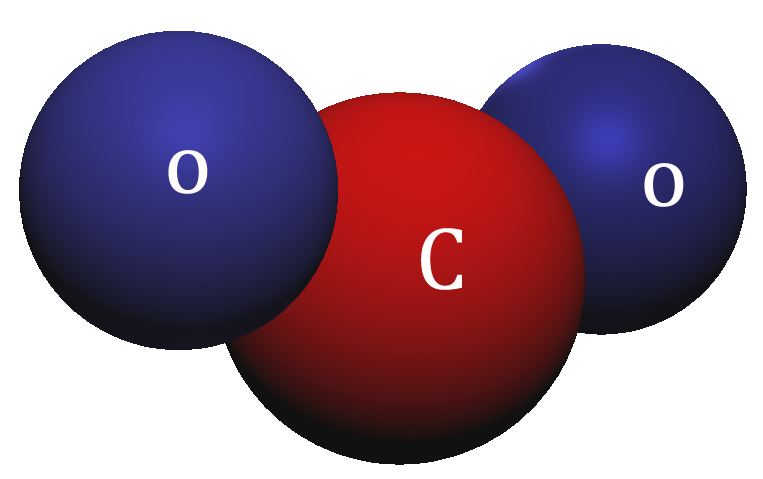


Why is the concentration of CO2 so important? Why not Methane?
  • Carbon dioxide is the one gas we produce, anthropogenically (unnaturally). This is due to the fact that carbon is abundant in our fossil fuel sources, and is one of the most abundant elements in our galaxy (estimated spectroscopically) with only Hydrogen, Helium and Oxygen being more abundant. Humans are 18% carbon by mass, thus, when we and many other plants and animals decompose, carbon is returned to the Earth and it's why when raw fuels, wood, etc, is burned CO2 is released.
  • Remember that plants also absorb CO2 during photosynthesis, massive amounts of it, 20% of our total annual emissions are absorbed by tropical forests alone - not including pine forests. That's the equivalent of 4.8 billion tonnes of CO2 emissions, each year. Source Thus, if we remove forests, not only do we release CO2 during the deforestation, but on average 1,000 kg of CO2 is not absorbded by each tree once it's cut down - removing 1,000 trees will mean 1 million kg of CO2 will not be absorbed each year.


What is the current concentration of CO2 in the atmosphere, in parts per million?
  • Measured at the Mauna Loa Observatory in Hawaii, at current concentration of CO2 is 391.06 ppm, as of March 2010.  That is, in Earth's entire atmsophere for every million parts, 391 are CO2 (presumable molecules). That doesn't sound like much, right? Read on.

Why is 350 ppm so important?
  •  350 parts per million is the level of Carbon Dioxide, which most scientists and climate experts agree, is the highest sustainable level at which we can live with the Earth's climate remaining stable - i.e. global warming remains in it's natural state, thus, any climate change will be natural.

When did the concentration rise above 350ppm?
  •  1987.

What was the concentration pre-industrialisation?
  • 275ppm of CO2, as it was for all of human history

If 391ppm is the current concentration, how much is 391ppm?
  • The atmosphere has a mass of about five quintillion (5x10¹⁸) kg, three quarters of which is within about 11 km (6.8 mi; 36,000 ft) of the surface.
  • CO2 at 387ppm (mid 2008 concentration) makes up 3.02188 x 10^12 kg, or 3.02188 trillion kg. This is an increase from 2.996 trillion kg, which is 2.588 billion kg more atmospheric CO2 in 2008, than in 2006.

How do we know what the concentration was thousands of years ago?
  •  Trapped in the deepest ice of the Antarctic, specifically the Eastern Antarctic Ice Shelf, the thickest ice on the planet, are air bubbles from thousands of years ago. By analysing the air bubbles in the deepest ice scientists can determine the concentration of gases in the atmosphere at the time when that very thin layer of ice was exposed at the surface. This is the most accurate way of measuring ancient atmopsheric compositions.

What if the CO2 concentrations keep increasing?
  •  The more CO2 there is the atmosphere, the more molecules of CO2 in the atmosphere, resulting in  more UV radiation from the sun  being absorbed and re-radiated back to the surface of the Earth instead of escaping into space, thus, trapping more of the sun's UV radiation inside the Earth's atmosphere and warming the planet - global warming. This global warming will cause changes in weather patterns which, if sustained over more than 30 years, is considered to be climate change.

If you are interested in learning more, or supporting the campaign called "350", visit the 350.org website, and connect on Twitter, Facebook, Flickr, and/or YouTube.


What do you think? How important is the number 350 in this context?


Thank you for reading!

As you may have heard there's a rather large meeting in Copenhagen between world leaders and delegates from almost every country on the planet.

What's it about?
Climate talks will be held in Copenhagen, Denmark between all members of the United Nations - which is 192 out of 195 countries.
The number of leaders planning to come to the December 7-18 talks has risen to 98 (possibly more by now) out of the 192 members of the United Nations. Most world leaders will attend on last two days of the talks, Obama recently changing his mind about when he would attend.


Why is it a big deal?

Many scientists believe this is the last chance we (as humans) have to do something about climate change, and it needs to big.


Islands are already disappearing and some of these nations, such as the Maldives are now carbon neutral as a result. These island nations will need to evacuated before 2050 if the IPCC's predictions prove true. Although, Dr. James Lovelock's predictions are much worse, which is discomforting considering he's a climate maverick, inventor, and the most important scientific thinker alive (he's done for Climate Science what Einstein and Newton did for Physics).
These predictions, of a 6c rise by 2100 are why there is a need for action. There are two choices we currently have:

1. Do nothing.
2. Do all we can, now.


What are the consequences of these two choices?

Say we do nothing, and the worst predictions are true, we will be unprepared and social and economic collapse would occur in a heartbeat. It will become the survival of the fittest and there will likely be climate wars.
We do nothing, it doesn't happen - HAPPY DAYS!
We do all we can and it IS true, we are as prepared as possible and strong enough to tackle whatever nature throws at us - we can survive, even though socially and economically strained beyond comprehension.
We do all we can and....! Nothing. Ooops! Massive cost, for what? Nothing, although we are being very nice to the planet.


Which is more of a risk to you?

THIS is why it's a big deal: what happens at the coming climate talks has the potential to change the course of the human race 50 years down the line. Also, we cannot be certain of anything! Gamble with the future of a race? Hmm, would you take that risk?


What are they aiming for?

They are aiming to do as much as possible, but as often is with politics, some countries will refuse to climb aboard until another country does first. The current argument between industrializing nations such as China and India, is that the developed countries who went through the same process had no restrictions and it's their fault emissions have risen so much and they aren't doing enough themselves to be 'cleaner'.
Developed countries counter with "we need everyone on board for this to make a difference" and the US & Canada often refuse to agree upon a deal until India and China do, these are the largest polluters in the world, following one another and getting nowhere. This is what worries many, as if that happens in Copenhagen, a lot will have been lost.

Climate scientists are convinced the world must stop the growth in greenhouse gas emissions and start making them fall very soon. To have a chance of keeping warming under the dangerous 2C mark, cuts of 25%-40% relative to 1990 levels are needed, rising to 80%-95% by 2050. So far, the offers on the table are way below these targets.

As for the stolen e-mails? 1,700 UK Scientists have signed a statement saying climate change IS due to human activities.
Climate skeptics misrepresented both the content and the significance of the stolen e-mails, quotes were also cherry-picked from the sources.

The Met. Office has released temperature records to debunk these claims. Which is a considerable amount of evidence, if one reads the article here.


The best way to get world leaders to come up with a climate deal that is fair, ambitious, and binding is to:

  1. Sign the TckTckTck petition.
  2. Raise your voice at Hopenhagen.org.
  3. Educate yourself about basic climate science.
  4. Educate others.
  5. Write to your local government, environment minister or national leader.


It's everywhere, talk of going green, "global warming" and this thing it causes, "climate change", but how much do you really know about it?
Let's start with Gaia, the theory that is now widely accepted and is described as the earth as: "The Gaia Theory posits that the organic and inorganic components of Planet Earth have evolved together as a single living, self-regulating system. It suggests that this living system has automatically controlled global temperature, atmospheric content, ocean salinity, and other factors, that maintains its own habitability." [Source]

With strong evidence of past hot and cold periods during Earth's lifetime, a natural cycle has been deducted. After collision with an asteroid that is believed to have wiped out the then dominant species, dinosaurs, the Earth was still in a hot state, hence, an ice age followed, on a geological timeline, fairly soon afterward. This was Gaia re-adjusting, so much that glaciation extended further south than Canada's modern border and into northern Europe. As diversity increased in the cool period almost to the point of destabilization - likely through population - Gaia readjusted again to bring about the diversity of the experienced until at least the 1800's.
Since the industrialization of the current M.E.D.C's (more economically developed countries) and the invention of the combustion engine and 'discovery' of electricity we have been consuming fossil fuels at a near exponential rate as our technology has become more sophisticated.
This is a problem for Gaia as she was already trying to balance the warm period, but with the release of greenhouse gases, so called because they trap and re-radiate heat, the natural balance has been upset. Of course, as the majority of greenhouse gases now come from unnatural sources.
Considering the amount of geological time it takes Gaia to adjust, and the fact that the average global temperature has increased by 1F in the last one hundred years, and by 4F in some regions, the vast majority of scientists now accept that climate change, as a result of global warming, is mainly caused by humans.

Global warming causes climate change purely due the sensitivity of the world's climate to changes in temperature, and not only climate, but ocean current's too. Ocean currents determine how warm or cool parts of the world are, for example, if the Gulf Stream were to change course and move south toward Spain, the UK, along with north-western Europe would become as cold as parts Greenland for a considerable amount of the year.
North Eastern Europe would experience winters similar to those in Siberia currently, if it were to move further north, the opposite would happen and British tourists would be less likely to holiday in southern Spain!
Ocean currents can affect weather patterns to an extent too, but not as much as the inland temperatures. Weather patterns will change independently, as they constantly too, but the frequency of extreme weather would increase. A warmer summer in the Caribbean would likely result in a more severe hurricane season, which has been seen recently, we all know where.
When the atmospheric composition changes, there will likely be effects. Carbon dioxide is now at levels of 390 parts per million, when in 1970 the levels were close to 330 parts per million, and in 1880 levels were around 290 ppm. Oh, and, in the last 800,000 years, the CO2 concentration has never gone above 310 parts per million (see below)


Hardly a natural increase?

Such a big change in a very short of amount of geological time is likely to have many consequences.

These continually accelerating changes are why our world leaders need to leave Copenhagen having signed an ambitious, fair and binding climate agreement, with all countries involved, especially the U.S., China and Canada. For too long we have sat back and denied, debated and been sheepish when it comes to policy. This December could be the last chance our world leaders have to collectively combat climate change. If you want to let them know you want the same, I suggest you explore the TckTckTck campaign, and sign your name along with 1.93 million other citizens worldwide who have done so already. Together we can make a lot of noise.

Thank you for reading!


This has been my contribution to Blog Action Day along with some of my own photographs, located here.

The greenhouse effect is a natural effect that causes the Earth’s atmosphere to be about 33°C warmer than it would be without the layer of greenhouse gases. These gases allow short-wave radiation from the sun to be transmitted to the Earth’s surface but prevent long-wave radiation from leaving the atmosphere. The gases also absorb the heat from the ground, heat up and then re-radiate the extra warmth back down to the Earth’s surface.

There are a number of gases that contribute to the natural greenhouse effect.
Water Vapour, although subject to wide fluctuations, does have an enormous long-term effect. E.g. Clouds composed of large amounts of water vapour, reduce heating by day by cutting out the suns radiation, and reduce cooling by night by preventing the escape of long-wave radiation.
Carbon Dioxide is released as a result of respiration and decay.
Methane is released by bacteria during the anaerobic decay of many types of organic matter. Some methane has become trapped beneath the ground, especially in conjunction with coal.
Nitrous Oxide (N2O) is released as a result of bacterial activity in soils and the oceans.


There is strong evidence that the pace of global climate change in increasing and that this correlates with the increase in greenhouse gas emissions as a result of human activities (industrialisation).
The concentration of the following gases has been increased by anthropogenic means.
Carbon Dioxide is mostly produced through the burning of fossil fuels. Fossil fuels contain large amounts of carbon that were locked away millions of years ago. Burning these involves oxidation of the carbon, thus it releases carbon dioxide in the air much faster than it can be locked away. Deforestation means not only that there are fewer trees to absorb CO2; but also that additional CO2 is released into the atmosphere when the wood decomposes or burns.

Methane has a greater greenhouse effect. Anaerobic bacteria produce large amounts: in paddy fields, which are flooded during the establishment phase of a rice crop; in landfill sites; and by cattle during the digestion of cellulose. Methane is also released during the ventilation of coalmines, leaks from pipelines and natural gas fields.

Nitrogen Oxides are mostly released into the atmosphere from burning petrol and diesel fuel for transport but some also come from the burning of fossil fuels in power stations, and the production and use of nitrogen fertilisers.

Chlorofluorocarbons (CFCs) are entirely anthropogenic the have been manufactured for use as aerosol propellants, refrigerants, and solvents, in fire extinguishers and to make expanded plastics such as foam.

Low-level (tropospheric) ozone is produced by photochemical reactions between nitrogen dioxide and non-methane hydrocarbons (NHMC) from vehicle exhausts. NHMC also act as greenhouse gases themselves.

Campaign released by the UK Government


Educating


News